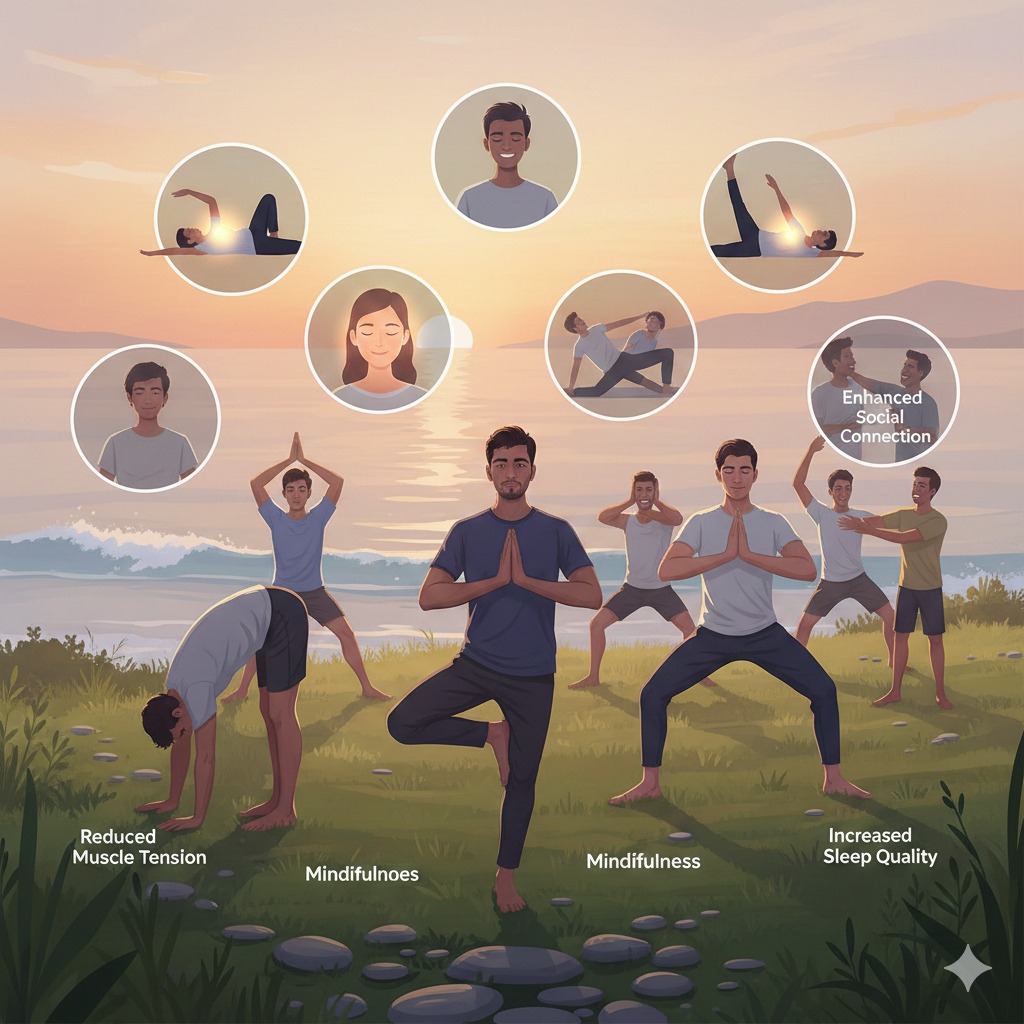
In today’s fast-paced, hyperconnected world, chronic stress has become a common lifestyle challenge. One of the key biological indicators of stress is cortisol, often referred to as the stress hormone. Persistently high cortisol levels can lead to anxiety, poor sleep, weight gain, weakened immunity, and emotional imbalance.
Research and holistic health practices increasingly highlight yoga for cortisol reduction as an effective and natural solution. Yoga not only promotes physical flexibility but also plays a vital role in reducing cortisol levels and restoring mind–body balance.
This comprehensive guide explores seven evidence-based ways that yoga naturally lowers cortisol, calms the nervous system, and supports long-term stress resilience and emotional well-being.
1. How Yoga Calms the Nervous System for Cortisol Reduction
One of the most powerful ways yoga supports cortisol reduction is by calming the nervous system. Stress activates the sympathetic nervous system, triggering the body’s fight-or-flight response and increasing cortisol secretion.
Yoga for cortisol reduction stimulates the parasympathetic nervous system, which is responsible for rest, relaxation, and recovery. This shift from sympathetic to parasympathetic dominance is the biological foundation of yoga’s stress-relieving effects.
How Yoga Activates the Relaxation Response
Slow movements, controlled breathing, and intentional postures signal safety to the brain, allowing cortisol levels to gradually decline. As the nervous system relaxes:
- Heart rate slows to a resting pace
- Blood pressure stabilizes and decreases
- Breathing becomes deeper and more rhythmic
- Muscle tension releases throughout the body
- Digestive function improves as the body exits survival mode
- Mental clarity increases as the stress response diminishes
This nervous system regulation is a foundational reason why yoga for stress relief is highly effective in managing both daily and chronic stress. The body shifts into a state of calm, creating optimal conditions for natural cortisol reduction.
2. Mindful Yoga Practices That Reduce Cortisol Levels Naturally
Mindfulness plays a central role in how yoga reduces cortisol levels naturally. Mindful yoga practices encourage present-moment awareness, helping individuals disengage from stress-inducing thoughts about the past or future.
When the mind is calm and focused, cortisol production decreases significantly. The mental rumination and worry that typically drive cortisol elevation are interrupted by mindful attention to breath, sensation, and movement.
Key Components of Mindful Yoga for Stress Reduction
- Mindful breathing (pranayama): Conscious breath regulation that directly influences the autonomic nervous system
- Body awareness: Tuning into physical sensations without judgment or reaction
- Meditative movement: Flowing through poses with full attention and intention
- Present-moment focus: Anchoring awareness to the current experience rather than mental narratives
- Non-reactive observation: Witnessing stress responses without automatically engaging them
Mindful breathing, body awareness, and meditative movement allow practitioners to observe stress responses without reacting to them. This conscious awareness reduces emotional reactivity and lowers the stress hormone cortisol.
Over time, mindful yoga practices rewire stress patterns in the brain, making the body more resilient to pressure and emotional triggers. The prefrontal cortex—the brain’s rational, decision-making center—becomes more active, while the amygdala—the fear and stress center—becomes less reactive.
3. Gentle Yoga Poses for Cortisol Reduction and Muscle Relaxation
Gentle yoga poses play a crucial role in cortisol reduction and muscle relaxation. Chronic stress often leads to muscle tightness, especially in the neck, shoulders, and lower back. This physical tension signals ongoing stress to the brain, contributing to elevated cortisol levels.
Gentle yoga poses for cortisol reduction help release stored tension and promote deep physical relaxation. As muscles relax, the body sends calming signals to the nervous system, reducing cortisol secretion.
Most Effective Gentle Yoga Poses for Stress Relief
- Child’s Pose (Balasana): Calms the nervous system and provides a sense of safety and grounding
- Legs Up the Wall (Viparita Karani): Activates the parasympathetic nervous system and reduces cortisol
- Supine Twist (Supta Matsyendrasana): Releases spinal tension and promotes relaxation
- Corpse Pose (Savasana): Allows complete physical surrender and deep restoration
- Cat-Cow (Marjaryasana-Bitilasana): Gentle spinal movement that relieves tension and improves breath awareness
- Forward Fold (Uttanasana): Calming inversion that quiets the mind and releases hamstring tension
- Reclined Bound Angle (Supta Baddha Konasana): Opens the chest and hips while promoting deep relaxation
Restorative and slow-flow yoga styles are especially effective for stress hormone balance, making yoga a natural and accessible approach to stress management. These practices prioritize relaxation over exertion, making them ideal for cortisol regulation.
4. Breathing Techniques in Yoga That Lower Cortisol Naturally
Yogic breathing techniques, known as pranayama, are among the most powerful tools for reducing cortisol levels. Breath is the only autonomic function we can consciously control, making it a direct bridge between mind and body.
Evidence-Based Breathing Practices for Cortisol Reduction
- Alternate Nostril Breathing (Nadi Shodhana): Balances the nervous system and reduces stress hormone production
- Three-Part Breath (Dirga Pranayama): Engages full lung capacity and activates the relaxation response
- Extended Exhalation: Making exhales longer than inhales triggers parasympathetic activation
- Ujjayi Breath (Victorious Breath): Creates a calming rhythm that soothes the nervous system
- 4-7-8 Breathing: Proven to reduce cortisol and induce relaxation (inhale 4, hold 7, exhale 8)
- Belly Breathing (Diaphragmatic): Engages the vagus nerve and promotes deep calm
Research shows that controlled breathing practices can reduce cortisol levels by up to 25% within just 10-15 minutes. The vagus nerve—which runs from the brain through the diaphragm—is directly stimulated by deep, intentional breathing, signaling safety to the entire nervous system.
5. Regular Yoga Practice for Long-Term Cortisol Reduction
Consistency is key when using yoga for cortisol reduction. While a single yoga session can lower stress temporarily, regular yoga practice creates long-term changes in cortisol regulation.
Benefits of Consistent Yoga Practice
Practicing yoga consistently trains the body to respond more calmly to stressors, preventing excessive cortisol spikes. Research demonstrates that individuals who practice yoga regularly experience:
- Improved baseline cortisol levels: Lower resting cortisol throughout the day
- Faster cortisol recovery: Quicker return to baseline after stressful events
- Enhanced stress tolerance: Greater capacity to handle challenges without becoming overwhelmed
- Better emotional stability: More balanced mood and reduced anxiety symptoms
- Stronger hormonal balance: Improved regulation of multiple stress-related hormones
- Increased resilience: Greater ability to maintain equilibrium during difficult periods
Long-term yoga practitioners often experience improved stress tolerance, emotional stability, and better hormonal balance. Regular yoga practice strengthens the mind–body connection, helping individuals recognize stress early and respond with awareness rather than tension.
Optimal Practice Frequency for Cortisol Management
Research suggests that practicing yoga 3-5 times per week for at least 20-30 minutes per session produces measurable reductions in cortisol levels. Even shorter daily practices of 10-15 minutes can be effective when done consistently.
This makes yoga an effective long-term strategy for reducing cortisol naturally and maintaining overall well-being without requiring hours of daily commitment.
6. Yoga’s Impact on Sleep Quality and Cortisol Rhythm
Sleep and cortisol have a bidirectional relationship—poor sleep elevates cortisol, and high cortisol disrupts sleep. Yoga addresses both sides of this equation, making it particularly effective for individuals experiencing stress-related sleep disturbances.
How Yoga Improves Sleep and Cortisol Patterns
- Restores natural cortisol rhythm: Yoga helps cortisol peak in the morning and decline at night
- Reduces evening cortisol: Evening yoga practices lower cortisol before bedtime
- Improves sleep quality: Deeper, more restorative sleep allows natural cortisol regulation
- Reduces nighttime waking: Lower cortisol prevents stress-driven sleep interruptions
- Supports melatonin production: As cortisol decreases, sleep hormones can function properly
Studies show that individuals who practice gentle yoga in the evening experience significantly improved sleep quality and lower morning cortisol levels compared to non-practitioners. This creates a positive cycle where better sleep further supports cortisol regulation.
7. Holistic Impact of Yoga on Cortisol Reduction and Emotional Well-Being
The holistic impact of yoga on cortisol reduction extends beyond physical relaxation. Yoga integrates movement, breath, and mindfulness, addressing stress at physical, mental, and emotional levels simultaneously. This comprehensive approach is what makes yoga uniquely effective for stress management.
Multi-Dimensional Benefits of Yoga for Stress Relief
This holistic approach supports:
- Emotional regulation: Better ability to manage and express emotions appropriately
- Mood improvement: Increased production of feel-good neurotransmitters like serotonin and GABA
- Mental clarity: Enhanced focus, concentration, and cognitive function
- Self-awareness: Deeper understanding of personal stress patterns and triggers
- Body confidence: Improved relationship with physical self through mindful movement
- Social connection: Community and support when practiced in group settings
- Sense of control: Empowerment through accessible self-care practice
By reducing cortisol levels, yoga helps balance other hormones associated with mood and sleep, including serotonin, dopamine, and melatonin. Lower cortisol levels are linked to reduced anxiety, improved emotional resilience, and greater overall life satisfaction.
The holistic benefits of yoga for stress relief make it a sustainable and empowering practice for emotional well-being and long-term health. Unlike isolated interventions that address only one aspect of stress, yoga creates systemic change throughout the mind-body system.
Getting Started with Yoga for Cortisol Reduction
Beginning a yoga practice for stress management doesn’t require advanced flexibility or experience. Here’s how to start:
Tips for Beginners
- Start gently: Begin with restorative or gentle yoga classes designed for stress relief
- Focus on breath: Prioritize breathing practices over complex poses initially
- Be consistent: Practice 10-15 minutes daily rather than occasional longer sessions
- Listen to your body: Avoid pushing into pain or strain, which can increase cortisol
- Create a calm space: Practice in a quiet, comfortable environment when possible
- Use guided resources: Online videos, apps, or classes can provide structure and support
- Practice patience: Cortisol reduction benefits accumulate over weeks, not days
Best Types of Yoga for Cortisol Management
- Restorative Yoga: Deeply relaxing poses held for extended periods with props
- Yin Yoga: Slow-paced practice targeting deep connective tissues
- Hatha Yoga: Traditional, balanced practice suitable for all levels
- Gentle Flow: Slow, mindful movement sequences
- Yoga Nidra: Guided meditation practice often called “yogic sleep”
Avoid high-intensity or “power” yoga styles initially if cortisol is already elevated, as these can temporarily increase stress hormones.
Conclusion: Yoga as a Natural Solution for Cortisol Management
Yoga for cortisol reduction offers a comprehensive, accessible, and scientifically supported approach to stress management. By calming the nervous system, promoting mindfulness, releasing physical tension, improving sleep quality, and supporting emotional well-being, yoga addresses the root causes of elevated cortisol rather than merely masking symptoms.
The beauty of yoga lies in its adaptability—whether you have 10 minutes or an hour, whether you’re a complete beginner or experienced practitioner, yoga can be tailored to meet your needs and support your stress management goals.
As research continues to validate what yogis have known for thousands of years, yoga emerges as one of the most effective natural interventions for cortisol reduction and overall hormonal balance. The practice requires no special equipment, can be done anywhere, and becomes more beneficial the longer you practice it.
Start where you are. Choose one gentle practice from this guide. Commit to consistency over intensity. Over time, you’ll build a powerful tool for natural stress relief and cortisol management that serves you for life.
Ready to begin your journey toward balanced cortisol and lasting stress relief? Start with just 10 minutes of gentle yoga today and experience the transformative power of this ancient practice for modern stress.
